
东京爱情故事
Grassroots official’s 30-year fight against desertification in North China_我的网站

一 | PORTLAND, Ore. -- Federal regulators on Thursday approved the expansion of a natural gas pipeline in the Pacific Northwest over the protest of environmental groups and top officials in West Coast states, who said it goes against the region’s plans to address climate change and could pose a wildfire risk.The project, known as GTN Xpress, aims to expand the capacity of the Gas Transmission Northwest pipeline, which runs through Idaho, Washington and Oregon, by about 150 million cubic feet (4.2 million cubic meters) of natural gas per day. The Federal Energy Regulatory Commission gave it the green light in a vote on Thursday.TC Energy plans to modify three compressor stations along the pipeline — in Kootenai County, Idaho; Walla Walla County, Washington; and Sherman County, Oregon. Compressor stations help maintain the pressure and flow of gas over long distances in a pipeline. Environmental groups criticized the decision of the commission, which "failed to listen to Senators, Governors, State Attorneys General, Tribes, and the public in its rubber stamp of unnecessary fracked gas in the Northwest,” said Audrey Leonard, staff attorney for Columbia Riverkeeper, an environmental nonprofit, in a statement.Leonard said potential spills and explosions on the pipeline, which was built in the 1960s, would not only harm the environment but also present a heightened wildfire risk in the arid regions it passes through.“An explosion of that level in eastern Washington or eastern Oregon would be catastrophic,” she said.Leonard said Columbia Riverkeeper will appeal the federal regulators’ decision and submit a petition for a rehearing. The pipeline belongs to TC Energy of Calgary, Canada — the same company behind the now-abandoned Keystone XL crude oil pipeline. The company said the project is necessary to meet consumer demand.Environmentalists and officials opposed to the project have expressed concern about TC Energy’s safety record. Its Columbia Gas Transmission pipeline exploded in Strasburg, Virginia, in July and its existing Keystone pipeline spilled nearly 600,000 gallons of bitumen oil in Kansas last December.The 1,377-mile (2,216-kilometer) pipeline runs from the Canadian border through a corner of Idaho and into Washington state and Oregon, connecting with a pipeline going into California.While Idaho’s Republican governor and congress members said that imposing other states’ climate policies would be “misguided,” Democratic officials in the other states called on federal officials to reject the plan. After the vote, Washington Gov. Jay Inslee, a Democrat, condemned the decision.The project is “incompatible with our climate laws,” said a letter to the agency by Democratic U.S. Senators Ron Wyden and Jeff Merkley of Oregon and Patty Murray and Maria Cantwell of Washington.“GTN Xpress represents a significant expansion of methane gas infrastructure at a time when California, Oregon, and Washington are moving away from fossil fuels,” the senators said.The attorneys general of the three states, citing the commission's draft environmental impact statement for the project, said it would result in more than 3.47 million metric tons of greenhouse gas emissions per year for at least the next three decades. The agency’s final environmental assessment revised that number downward by roughly half in calculations contested by environmental groups.The agency’s chairman, Willie Phillips, reiterated its stance after Thursday’s vote.“There was no evidence presented that this project would significantly increase greenhouse gas emissions,” he told reporters. “The commission determined that this project was needed and therefore we support its approval.”In its final environmental impact statement for the project issued last November, the federal agency said the compressor stations were in non-forested areas with low to moderate fire hazard. It concluded the project “would result in limited adverse impacts on the environment.”“Most adverse environmental impacts would be temporary or short-term,” the federal agency said. The agency recommended certain steps, such as requiring the company to train its personnel and contractors on environmental mitigation measures before any construction begins. But environmental groups say the assessment didn’t adequately address the harm caused by the project, including by fracking to obtain the natural gas that flows through the pipeline. Fracking is a technique used by the energy industry to extract oil and gas from rock by injecting high-pressure mixtures of water, sand or gravel and chemicals. It has been criticized by climate and environment groups for increasing emissions of methane, an extraordinarily potent greenhouse gas. ___Claire Rush is a corps member for the Associated Press/Report for America Statehouse News Initiative. Report for America is a nonprofit national service program that places journalists in local newsrooms to report on undercovered issues.。
Ecological restoration
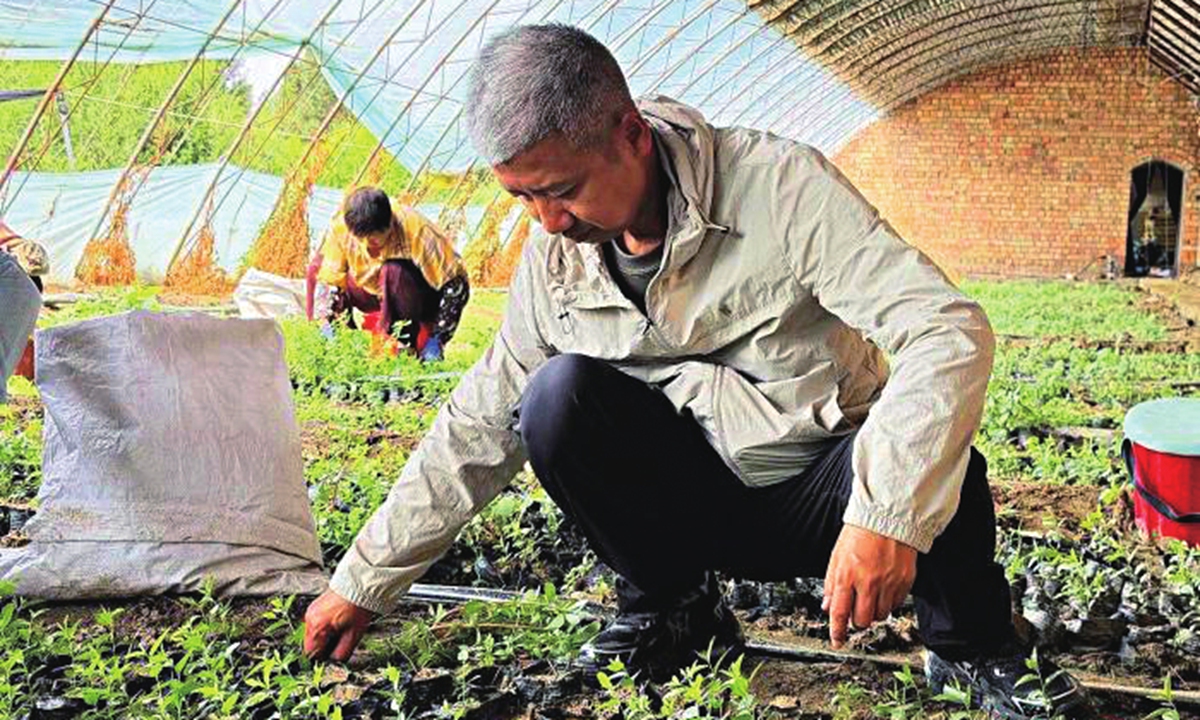
For over 30 years, Wensuyalatu, a member of the leadership group of the Urad Rear Banner forestry and grassland bureau, has made the Gobi Desert his workplace, dedicating his life to combating desertification, advancing ecological restoration through technological innovation, and helping local herders increase their incomes, according to the local bureau's official WeChat account.
Located on the edge of the desert in Bayannur's Urad Rear Banner, it is a key area in China's Three-North Shelterbelt Forest Program, a major ecological project aimed at strengthening the country's northern ecological security barrier.
However, early afforestation efforts in the desert were far from easy at the start.
The project covers 103,800 mu (about 6,920 hectares), including comprehensive treatment of 24,500 mu of desertified land, ecological restoration of 4,100 mu of non-desertified land, and 75,200 mu of enclosed grassland restoration. The project also includes the construction of 11 small-scale water conservation facilities, all of which required strict standards and extensive coordination.
The project also includes the construction of 11 small-scale water conservation facilities, all of which required strict standards and extensive coordination.
In 1991, Wensuyalatu, then in his early 20s, chose to devote himself to forestry and grassland conservation in the Urad Rear Banner. Since then, he has remained on the front lines of desertification control, witnessing the region's harshest environmental challenges and working to find solutions adapted to the fragile desert ecosystem.
In the early years, afforestation in the Gobi Desert was an extremely difficult task. The most critical planting season in spring often coincided with the strongest sandstorms of the year. Every year during the key afforestation period, Wensuyalatu would stay deep in the desert, guiding workers on planting techniques and management practices, while carefully overseeing every detail of the ecological restoration projects.
"Every spring, the wind and blown sand were so strong that it was hard to keep your eyes open. The sand hit your face like needles. During the day, we followed workers to dig holes and plant trees, and at night we stayed in temporary shelters to organize data and review the day's work. That was the normal routine for desertification fighters," Wensuyalatu recalled.
The road to restoring the desert was far from easy. Years of drought, low survival rates of seedlings, and skepticism from some local residents created major obstacles.
"At the beginning, it was really difficult. The climate was extremely dry, and many seedlings died after being planted. Some herders did not understand or support the work. They believed deserts were naturally barren and that no amount of effort could make trees grow there," Wensuyalatu said.
To change these perceptions, Wensuyalatu brought local residents to see firsthand the damage caused by desert expansion. Through visible results and long-term communication, he gradually won the understanding and support of the community.
Facing the ecological challenges of the Urad Rear Banner, Wensuyalatu began exploring new approaches beyond traditional restoration methods.
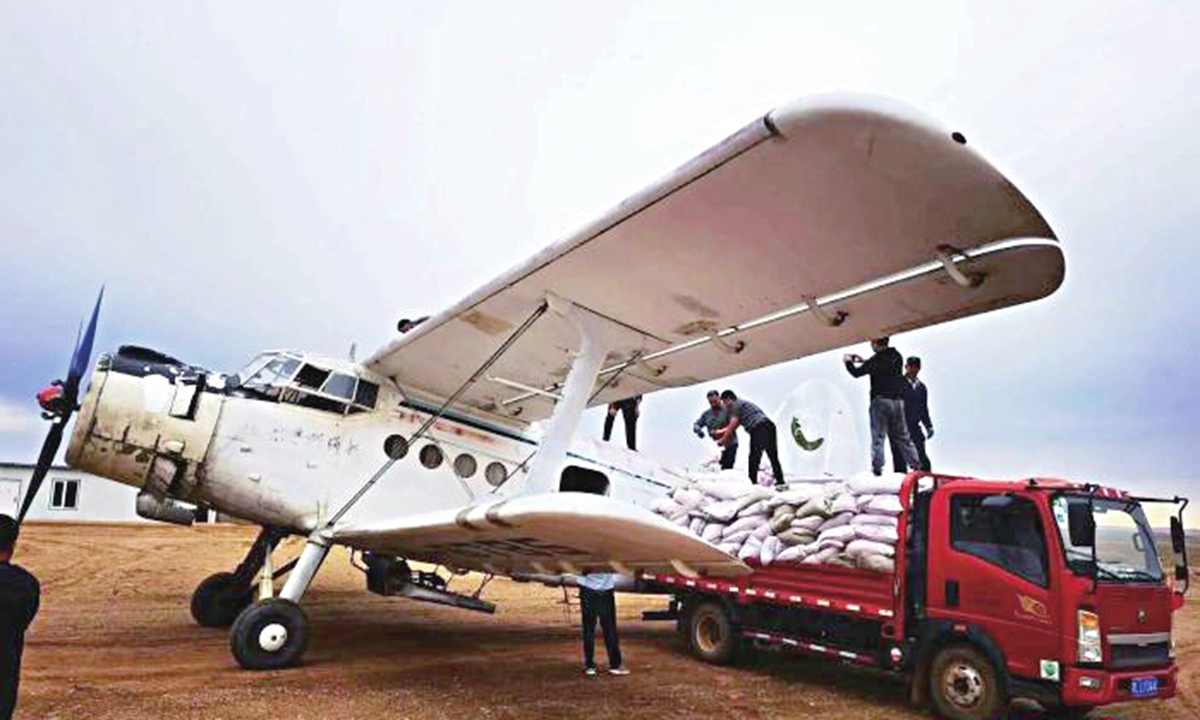
Since 2004, he has led efforts to tackle desert restoration challenges by introducing large-scale aerial seeding projects, creating a breakthrough approach for restoring degraded desert ecosystems in the region.
"Compared with traditional methods, aerial seeding is more efficient and can cover wider areas. Based on local climate and soil conditions, we select suitable desert plant seeds and precisely control the seeding height, density and timing to improve survival rates as much as possible and accelerate desert recovery," Wensuyalatu explained.
After years of effort, the aerial seeding projects under Wensuyalatu's leadership have restored more than 800,000 mu of desert land, with an effective restoration rate of 62.2 percent.
He also developed an integrated management approach combining "protection, management, retreat, restoration and publicity," establishing a mixed vegetation system of trees, shrubs and grass to curb desert expansion and reduce sandstorms at their source.
Beyond restoring greenery, Wensuyalatu has also focused on strengthening scientific research and protecting native desert species.
Starting in 2010, he devoted himself to the artificial cultivation of endangered native desert plants. After more than a decade of repeated experiments, he successfully developed cultivation techniques for rare species such as the endangered evergreen broadleaf shrub Ammopiptanthus mongolicus, Mongolian almond and drought-resistant elm.
Under his leadership, his team cultivated 6.5 million seedlings and completed more than 4,000 mu of high-quality afforestation projects, with seedling survival rates consistently exceeding 80 percent.
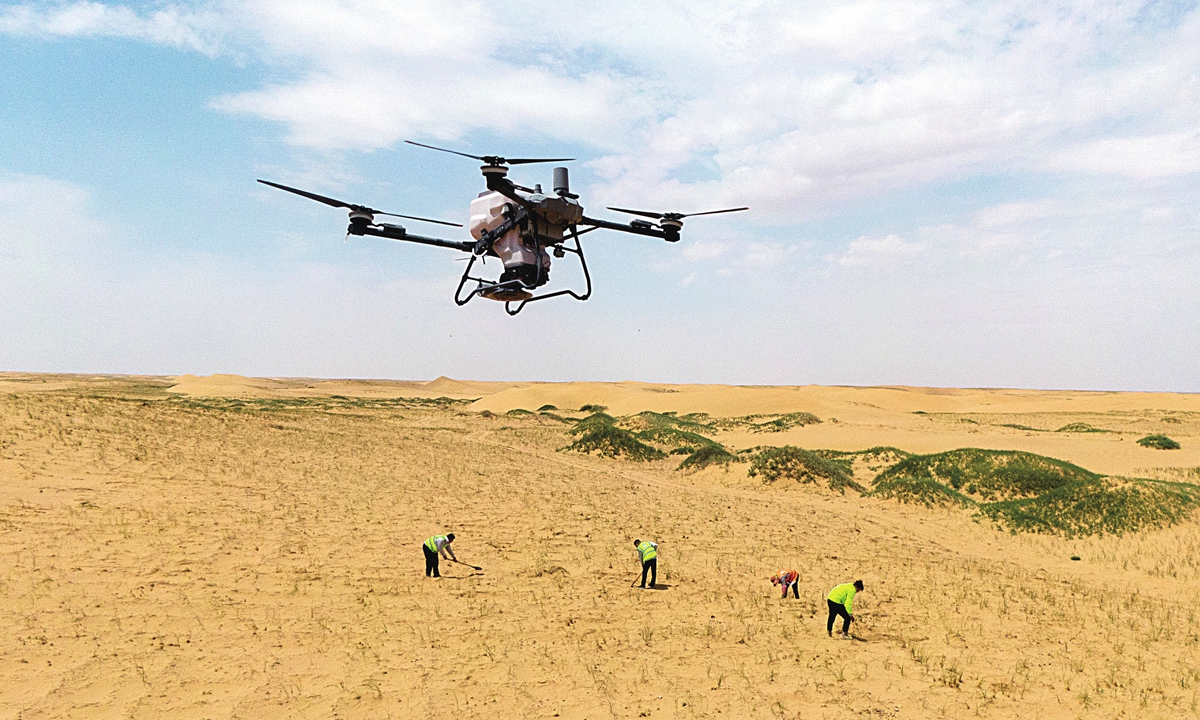
For Wensuyalatu, desert restoration is not only about creating ecological benefits, but also about improving people's livelihoods.
He has long promoted the idea that "trees should bring both ecological value and economic value." By leveraging local desert resources, he helped establish a 10,000-mu industrial base for desert plants and cistanche - a medicinal plant often grown in desert environments - across four key local villages, integrating ecological restoration with specialty desert industries.
"In the past, people thought desertification control was simply about planting trees - it took a lot of efforts but brought little income. Now things are different. By planting trees and developing industries such as cistanche cultivation, desert land can generate real wealth," a local herder said.
To ensure that local communities benefit from ecological development, Wensuyalatu introduced enterprises, supported family forest farms and professional cooperatives, and promoted large-scale, market-oriented operations.
The once barren desert has gradually become a "green treasure chest" for local herders, achieving a win-win outcome: greener landscapes, improved ecosystems, stronger businesses and higher incomes.
"Desertification control is not just an ecological project, but also a project that benefits people," Wensuyalatu said.
"Only when communities gain real benefits from protecting nature will they actively participate in ecological conservation. That is the key to making restoration efforts sustainable and achieving the vision that lucid waters and lush mountains are invaluable assets," Wensuyalatu said.
Global Times
。
Current article:http://8b4os.mexuanmeixuyaopinzheng.shop/5ampu/opwst.html
Published on:05:20:49